Who ranks for “ap euro unit 1 review”
“ap euro unit 1 review” gets about 260 searches a month in the US. The top results are lumisource.io, quizlet.com, tomrichey.net. The median Domain Rating on page one is DR 86, and the lowest is DR 16. To rank, you need relevant backlinks from sites like these.
98 organic results· Google estimates ~147
Google pages10/10
- AI Overview
- Videos
LumiSourcehttps://www.lumisource.io › ap › review › all
Unit 1: Renaissance and Exploration ; All Topics. Complete Unit Review ; Topic 1.1. Contextualizing Renaissance and Discovery ; Topic 1.2. Italian Renaissance.
Videos
4 videos · SERP position 2 1AP Euro Unit 1 REVIEW (Everything You NEED to Know)
Heimler's HistoryYouTubeApr 4, 2022
 2AP European History Unit 1 Review
 3The ITALIAN Renaissance, EXPLAINED [AP Euro, Unit 1 Topic ...
 4European EXPLORATION and EMPIRE-BUILDING [AP Euro, ...
Quizlethttps://quizlet.com › unit-1-heimler-ap-euro-flash-cards
Study with Quizlet and memorize flashcards containing terms like Machiavelli, Civic humanism, Leonardo Bruni and more. European History Unit 1 Review- Heimler....
AI Overview
AP European History Unit 1 covers Renaissance and Exploration (1450–1648), accounting for 10% to 15% of the AP exam.
1. The Italian Renaissance & Humanism
The Rebirth: Beginning in wealthy Italian city-states like Florence, Milan, Venice, and the Papal States, Europeans rediscovered classical Greek and Roman texts preserved by Islamic scholars. Humanism & Individualism: Petrarch (the "Father of Humanism") emphasized human potential, secular inquiry, and the study of the humanities over rigid medieval scholasticism. Civic Humanism: Thinkers like Leonardo Bruni argued that educated citizens should actively participate in politics. Niccolò Machiavelli wrote The Prince, arguing a ruler must maintain power by pragmatism rather than traditional Christian ethics ("the end justifies the means"). Artistic Innovations: Shifted away from flat, symbolic medieval styles toward linear perspective, geometric proportion, and naturalism. Key masters include Leonardo da Vinci, Michelangelo, Raphael, and Donatello. Printing Press: Johannes Gutenberg’s movable-type press (c. 1440s) mass-produced vernacular literature, accelerated literacy, and challenged traditional church and university monopolies.
2. The Northern Renaissance
Christian Humanism: Northern thinkers (like Desiderius Erasmus, author of In Praise of Folly) applied humanist critical skills to religious texts and church reform rather than purely pagan classics. Northern Art: Focused heavily on everyday peasant life, domestic interiors, and sharp detail (e.g., Pieter Bruegel the Elder) compared to the mythological focus of Italy.
3. The Rise of "New Monarchies"
Monarchs in England (Tudors like Henry VII and Henry VIII), France (Valois), and Spain (Ferdinand and Isabella) centralized power by: Levying direct national taxes. Creating professional standing armies. Subduing unruly nobility. Asserting control over the Catholic Church within their borders.
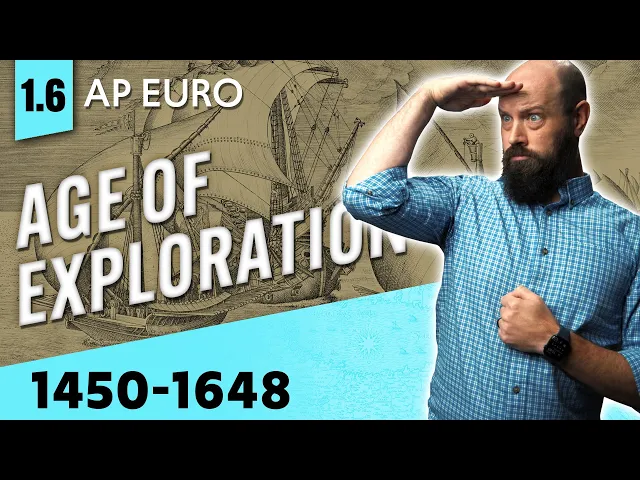
4. Age of Exploration & Global Encounters
Motives ("God, Gold, and Glory"): Driven by new maritime technology adopted from Asian and Islamic navigators—including the caravel, lateen sail, magnetic compass, and astrolabe. The Columbian Exchange: Widespread transfer of plants, animals, culture, and diseases between the Eastern and Western hemispheres. Consequences: Devastating population collapse among indigenous American societies due to European pathogens, alongside the rise of the transatlantic slave trade.
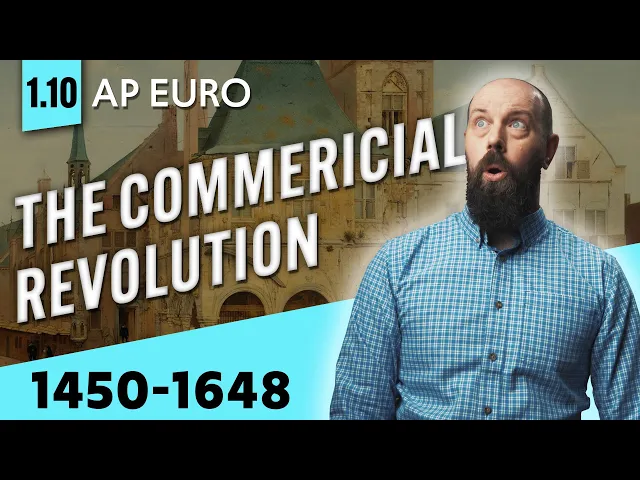
5. Economic Shifts: The Commercial & Price Revolution
The Price Revolution: Massive inflows of American silver (such as from Potosí) caused century-long inflation across Europe. Commercial Capitalism: Growth of joint-stock companies, banking innovations (e.g., Bank of Amsterdam), and the expansion of a money economy. Agrarian Divergence: In Western Europe, peasants gained more freedom as commercial agriculture and the enclosure movement grew. In Eastern Europe, nobility clamped down, tightening and expanding serfdom to maximize grain exports.
You can test and reinforce these concepts using flashcard sets like the Quizlet AP Euro Unit 1 Review or organized video breakdowns.
AP Euro Unit 1 REVIEW (Everything You NEED to Know)
Watch this comprehensive video review covering the major themes, key terms, and historical context of AP European History Unit 1: 33:58 AP Euro Unit 1 REVIEW (Everything You NEED to Know) 607K views · 4 years ago YouTube · Heimler's History
If you want to focus your prep further, tell me:Are you studying for a multiple-choice quiz or writing a DBQ/LEQ ? Which specific topic (like Humanism vs. Christian Humanism or the Columbian Exchange ) do you want to dive deeper into?
TomRichey.nethttps://www.tomrichey.net › blog › renaissance-and-expl...
Sep 5, 2019 — Unit 1 of the AP European History course focuses on the Renaissance and the Age of Exploration. I have collaborated with my friends at Marco
3

Reddit · r/APStudents4 comments · 7 years ago
How should I study AP European History Period 1?
My AP European History class starts next week. Right now I've been on break for 2 days and I'm already bored af. I think I'm gonna go ahead and start ...


Quizlethttps://quizlet.com › ap-euro-test-review-period-1-flash...
Study with Quizlet and memorize flashcards containing terms like 1450-1648 Humanism, 1450-1648 Renaissance Painting, 1450-1648 Christian Humanism and more.
See Which Sites Sell Backlinks
Sign up free to see all 100 results and find which domains are already selling links. Skip the guesswork and rank faster.
See All Results. It's Free.