Command Palette
Search for a command to run...
“grid-scale battery storage” gets about 170 searches a month in the US. The top results are wired.com, reddit.com, en.wikipedia.org. The median Domain Rating on page one is DR 56, and the lowest is DR 34. To rank, you need relevant backlinks from sites like these.
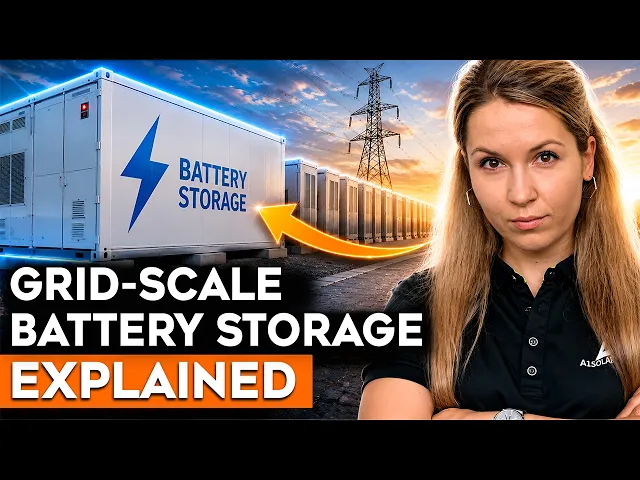
Grid-scale battery storage works like a giant, industrial rechargeable battery that balances electricity supply and demand on the power grid.
Charging (Absorption): The system captures extra electricity during times of low demand, often from solar or wind farms. Conversion: A Power Conversion System changes incoming alternating current (AC) into direct current (DC) for storage, and inverts it back to AC when releasing power. Control: An Energy Management System acts as the brain, monitoring the grid and deciding the exact second to store or release power.
Fast Response: Batteries react in a fraction of a second to stabilize grid frequency, beating traditional gas plants. Peak Shaving: They store cheap energy made during the day and release it at night when demand and prices go up. Renewable Integration: They close the gap between when solar panels flood the grid at noon and when people actually use power. Read more about how Grid-Scale Battery Storage Is Quietly Revolutionizing the Energy System on Wired.
If you want, tell me:Are you researching this for a commercial project, academic study, or general interest ? Do you want to focus on lithium-ion chemistry or alternative storage types like flow or sodium-ion? I can provide more targeted details for your needs.
This energy storage technology is harnessing the potential of solar and wind power—and its deployment is growing exponentially.
Sign up free to see all 100 results and find which domains are already selling links. Skip the guesswork and rank faster.
See All Results. It's Free.The SERP for grid-scale battery storage favors explainers and trusted institutions: #1 wired.com leads, followed by Reddit and Wikipedia. The University of Michigan factsheet adds current US deployment data, while lower results cover economics, criticism, and safety.
There’s room for a clearer, more useful page: explain how storage works, where it fits on the grid, its costs and limits, and cite fresh data. Add original analysis and answer common questions—the results also show AI Overview, People Also Ask, and video.