

Link equity is the ranking value one page can pass to another through a link. SEOs also call it link juice. Google's name for the original system is PageRank.
A link from a relevant, well-linked page can help the target page rank. A link from a page nobody links to, or a link marked nofollow, usually does little. Most of link building comes down to knowing the difference before you spend time or money.
How link equity works
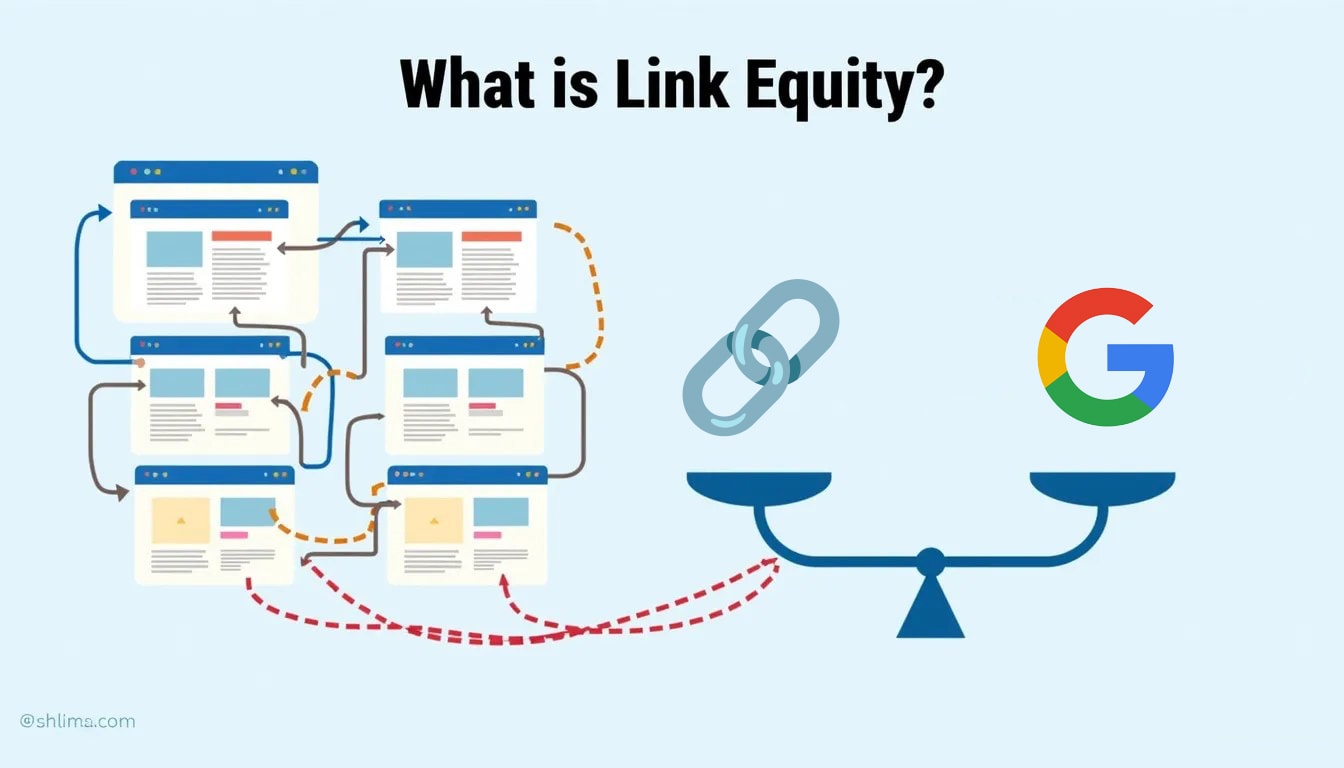
The original PageRank model treated each link as a vote. A page's score came from the pages linking to it, and each page split the score it could pass across its outgoing links.
So a page with 10 followed links passed about one tenth of its passable value through each link. A page with 100 links passed about one hundredth. Google's systems have changed a lot since then, and Google does not publish how much any single link counts. The basic idea still helps you compare two links.
Link equity belongs to pages first. A strong domain helps, but a new article with no internal links on a DR 80 site can pass less than a well-linked article on a DR 40 site.
DR (Ahrefs) and Authority Score (Semrush) are third-party estimates. Google does not use them. They are useful for sorting prospects, and a poor way to judge one link on its own.
What makes one link worth more than another
Check these six things, in this order:
- Topic match. A link from a page about payroll software means more to a payroll app than a link from a general lifestyle blog.
- Links to the linking page. A page with its own backlinks and internal links has more value to pass. Check it in Ahrefs, Semrush, or our backlink checker.
- Real search traffic. A site that ranks for real queries is more likely to be trusted by Google. A high DR with almost no traffic is a warning sign.
- Placement. A link inside the body of an article beats one in a footer or sidebar. Google's reasonable surfer patent describes giving more weight to links a reader is likely to click. A patent does not prove current behavior, but it matches what most SEOs see.
- Number of other links. A roundup with 300 outbound links spreads its value thin.
- Anchor text. The clickable words tell Google what the target page is about. Keep them natural. Our anchor text guide covers the mix to aim for.
Which links pass equity
| Link type | Passes equity? |
|---|---|
| Followed link in article body | Yes |
rel="nofollow" | Usually no. Google treats it as a hint |
rel="sponsored" | Usually no. Used for paid placements |
rel="ugc" | Usually no. Used for comments and forums |
| Link on a page blocked by robots | Google cannot crawl the page, so it cannot read it |
Button with no href | No. Google needs an <a> element with an href |
| 301 redirect to a relevant page | Yes, Google consolidates signals on the new URL |
Google has treated nofollow, sponsored, and ugc as hints since 2019, so it can choose to count them. Plan as if it will not. A link is followed by default, and there is no rel="dofollow" attribute. Read more in our guide to dofollow backlinks.
To check a link, right-click it, choose Inspect, and read the rel value on the <a> tag. Google also requires crawlable links, so a link added only through a click handler will not count.
How to find where your equity sits
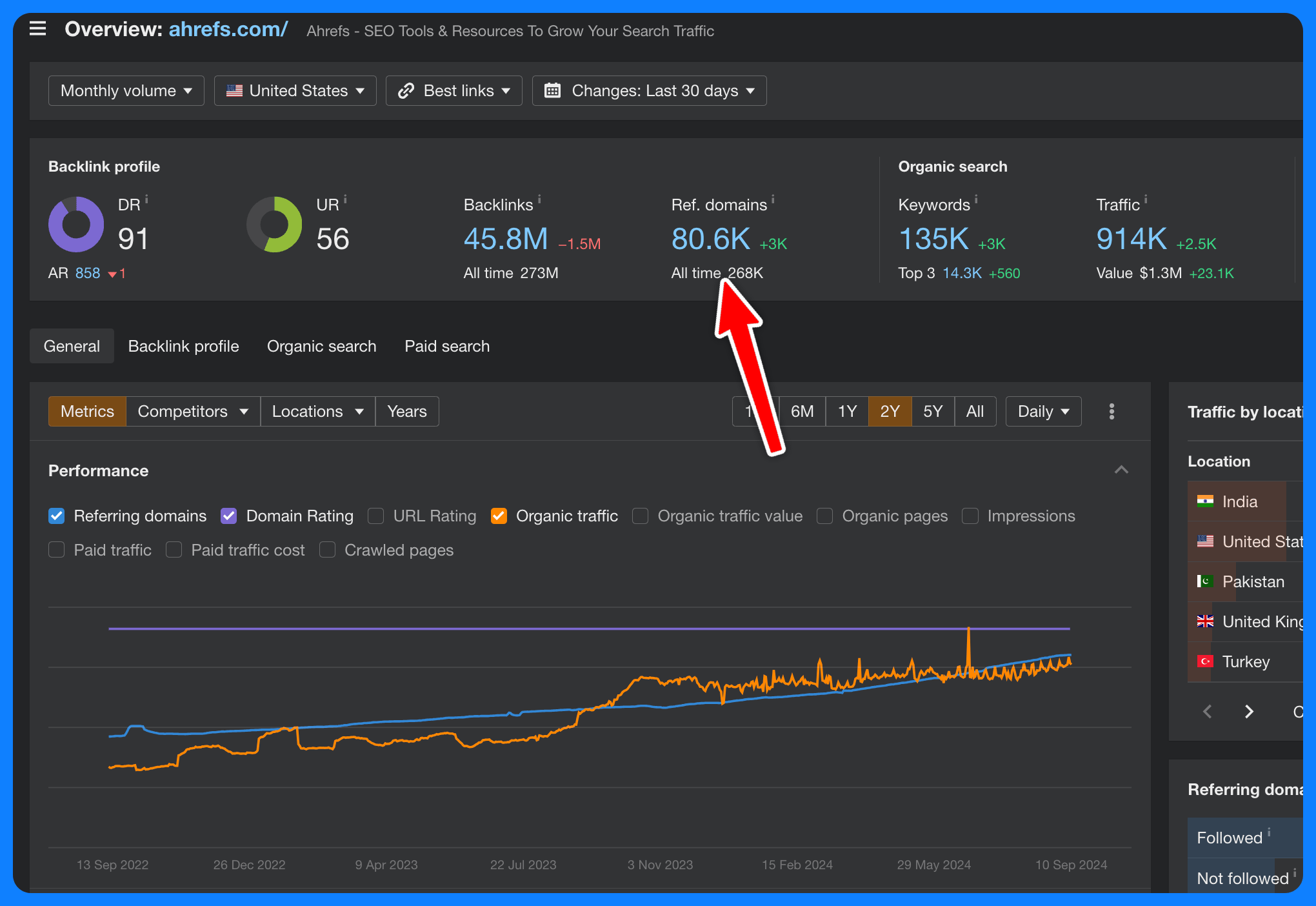
Referring domains, the number of unique sites linking to you, is the first number to read. The screenshot above shows it in Ahrefs Site Explorer. Ten links from ten sites usually help more than ten links from one site.
Next, sort your pages by referring domains. In Ahrefs this is the Best by links report. Your top pages are your internal equity sources. For many sites they are the homepage, a free tool, and a few old posts.
How to get more from the links you already have
These fixes cost nothing and often beat buying new links.
Link from strong pages to money pages
Open your five most-linked pages. Add a relevant in-text link from each one to the page you want to rank. If a blog post about invoice templates has 40 referring domains, link it to your invoicing software page.
Recover links that hit 404 pages
Export the backlinks pointing at broken URLs on your site. Add a 301 redirect from each one to the closest live page. Send a dead product URL to its replacement, and avoid sending everything to the homepage.
Remove redirect chains
If A redirects to B and B redirects to C, point A straight at C. Update your internal links to the final URL at the same time.
Fix orphan pages
An orphan page has no internal links, so it gets no equity from the rest of your site. Crawl the site with Screaming Frog or Semrush Site Audit and compare the result with your sitemap. Link every page that matters from at least one related page.
Cut sitewide link clutter
Mega menus and huge footers add dozens of links to every page. Keep the ones people use.
How to build new link equity
Internal linking only moves value you already have. To raise the total, you need links from other sites:
- Guest posts on sites in your niche. See how to write a guest post with AI.
- Listicle placements, where a "Best X" page adds your product.
- Link insertions in existing articles that already rank. See our guide to niche edits.
- Partner and integration pages from companies you already work with.
One risk to know: Google's spam policies list buying or selling links for ranking purposes as link spam. They also flag keyword-stuffed anchors in guest posts. If you pay for placements, choose sites that fit your topic, keep anchors natural, and avoid networks that exist to sell links.
If you want this done for you, the LinkDR link building service finds relevant publishers, runs the outreach, places dofollow links, and verifies them. Links cost $180 for DR 30+, $290 for DR 40+, $400 for DR 50+, and $520 for DR 60+. See current pricing.
FAQ
Is link equity the same as link juice?
Yes. Link juice is the informal name for the same idea.
Does link equity expire?
The link keeps passing value while it stays live and the linking page stays indexed. If the publisher removes the link, or the page loses its own links and traffic, the value drops. Monitor your backlinks so you catch lost links early.
Do social media links pass link equity?
Most social links are nofollow, so plan on no direct equity. A post can still put your page in front of someone who later links to it.
Do internal links pass link equity?
Yes. They move value between your own pages, which is why they are the fastest fix on this list.