
A backlink is a link on another website that points to a page on your website. If a food blog links to your recipe page, that link is a backlink for you.
Search engines treat backlinks as votes. A link from a relevant, trusted site tells Google that your page is worth finding. That is why backlinks are still one of the strongest ranking signals, and why most SEO budgets include some form of link building.
- A backlink is a link from another site to yours
- Relevance and site quality matter more than link count
- Links in the body of a real article carry the most weight
- Links from link farms and private blog networks can hurt you
- Check your competitors’ links to see how many you need
What a backlink looks like
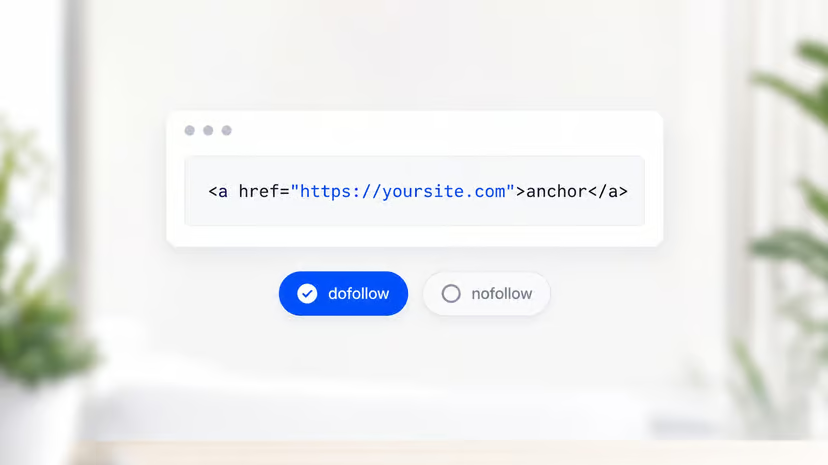
Every backlink has four parts: the page it sits on, the anchor text, the target URL, and an optional rel attribute.
<a href="https://yoursite.com/pricing">compare backlink prices</a>- Source page: the article or page that contains the link.
- Anchor text: the clickable words, here "compare backlink prices". It tells readers and search engines what to expect on your page. Our anchor text guide covers how to choose it.
- Target URL: the page on your site that receives the link.
- Rel attribute: values such as
nofollow,sponsored, orugctell Google not to pass ranking credit. A link without them is often called a dofollow backlink.
Why backlinks matter for SEO
Google's original ranking system, PageRank, scored pages by the links pointing to them. Search has changed a lot since then, but links still do three jobs:
- Ranking. Links from relevant sites pass authority, often called link equity, to your page.
- Discovery. Google finds new pages by following links. A page with no links pointing to it is slow to be crawled.
- Referral traffic. A link in a popular article sends real visitors, not only ranking signals.
For competitive keywords, content quality gets you into the race. Backlinks usually decide who wins it.
What makes a backlink good
Not all links are equal. One link from a relevant site with real readers can do more than a hundred links from sites nobody visits.
| Signal | Strong backlink | Weak backlink |
|---|---|---|
| Relevance | Site covers your topic | Unrelated site |
| Traffic | Real organic visitors | Little or no traffic |
| Placement | In the body of an article | Footer, sidebar, or author bio |
| Anchor text | Natural and descriptive | Exact-match keyword every time |
| Link attribute | Passes credit (no nofollow) | nofollow, sponsored, or ugc |
| Referring domain | New site linking to you | Site that already links to you |
Domain Rating (DR) from Ahrefs and Domain Authority (DA) from Moz estimate how strong a site's own link profile is. They are useful filters, but a high score alone does not make a link good. Check that the site ranks for real keywords and gets organic traffic.
Types of backlinks
| Type | How you get it | Typical value |
|---|---|---|
| Editorial link | A writer cites your page on their own | Highest |
| Guest post | You write an article for another site | High, if the site is relevant |
| Link insertion | Your link is added to an existing article | Medium to high. See niche edits |
| Resource page link | A curated list links to your tool or guide | Medium |
| Directory or citation | You list your business on a directory | Low, but useful for local SEO |
| Forum or comment link | You post on a forum or blog comment | Low, usually ugc or nofollow |
| Sponsored link | You pay for a marked ad or sponsorship | Traffic and brand, not ranking |
Backlinks that can hurt you
Google's spam policies target links built to manipulate rankings. These patterns carry the most risk:
- Private blog networks (PBNs): groups of sites built only to link out.
- Link farms: sites that publish anything for a fee, on any topic.
- Sitewide links in footers or sidebars across thousands of pages.
- Keyword-stuffed anchors repeated across many links.
- Links on hacked or spam sites.
Most bad links are simply ignored. A manual action is rare and usually follows a clear pattern. You do not need to disavow every low-quality link you find. Our guide to your backlink profile explains how to review it.
How to check your backlinks
- Google Search Console: the Links report lists top linking sites and your most linked pages. It is free but sampled.
- Ahrefs, Semrush, or Moz: full link indexes with DR, traffic, and anchor data.
- LinkDR's competitor backlink checker: see who links to a competitor and which sites you could pitch next.
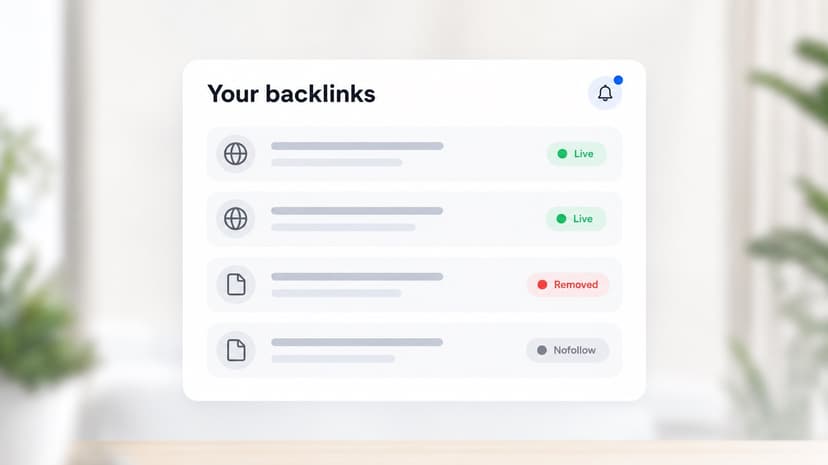
Once you have links, monitor them. Publishers remove links, change them to nofollow, or delete pages.
How to get backlinks
- Create something worth citing: original data, a free tool, a clear guide, or a template.
- Pitch relevant publishers: a guest post or a contribution to an existing article. This is what a blogger outreach service does for you.
- Fix broken links: find dead links on relevant pages and offer your page as the replacement.
- Claim unlinked mentions: ask sites that mention your brand to add a link.
- Use partnerships: integrations, customers, and suppliers often have partner pages.
- Answer journalists: quote requests from writers lead to editorial links on news and trade sites.
We cover each method in white hat link building strategies.
How many backlinks do you need?
There is no fixed number. Look at the pages that rank in the top five for your keyword and count their referring domains, meaning unique sites linking to them. If they have 40 and you have 5, the gap is your target.
Focus on unique, relevant domains. Ten links from ten good sites beat fifty links from one.
Get backlinks without doing the outreach
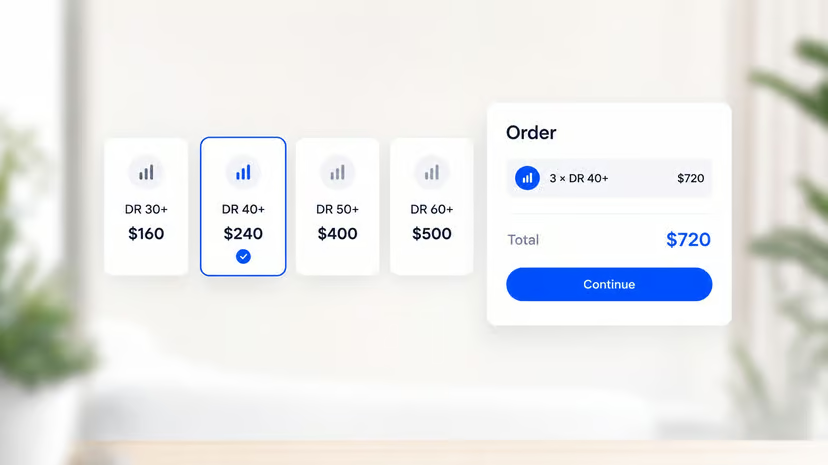
Link building takes time: finding sites, pitching them, writing articles, and following up. LinkDR does that work for you. Pick your target page and a Domain Rating tier, and we place your link on a relevant site with real traffic. DR 30+ links start at $160. See all prices.